"Assassin's Creed: 10 Historical Changes"
Author : Zoey
Apr 02,2025
Ubisoft has once again activated the Animus, this time transporting players to Japan's tumultuous Sengoku Period with Assassin’s Creed Shadows. Set in 1579, the game introduces historical figures like Fujibayashi Nagato, Akechi Mitsuhide, and the African samurai Yasuke, who served under Oda Nobunaga. In true Assassin’s Creed fashion, these historical characters are seamlessly woven into a narrative that blends fact with fiction, crafting a thrilling tale of revenge, betrayal, and murder. While the game might humorously suggest that Yasuke needed to gather XP to wield a gold-tier weapon, it's all in good fun, showcasing the series' unique approach to historical fiction.
Assassin’s Creed is renowned for its historical fiction, creating a universe where science fiction and ancient conspiracies intersect. The series is built on the premise of exploring historical gaps to narrate a gripping saga about a secret society's quest for world domination through the mystical powers of a pre-human civilization. Ubisoft meticulously researches to craft immersive open-world environments rooted in history, but it's crucial to understand that these games are not history lessons. Instead, they creatively alter historical facts to enhance storytelling, resulting in a rich tapestry of alternate history.
Here are ten notable instances where Assassin’s Creed has creatively rewritten history:
The Assassins vs Templars War
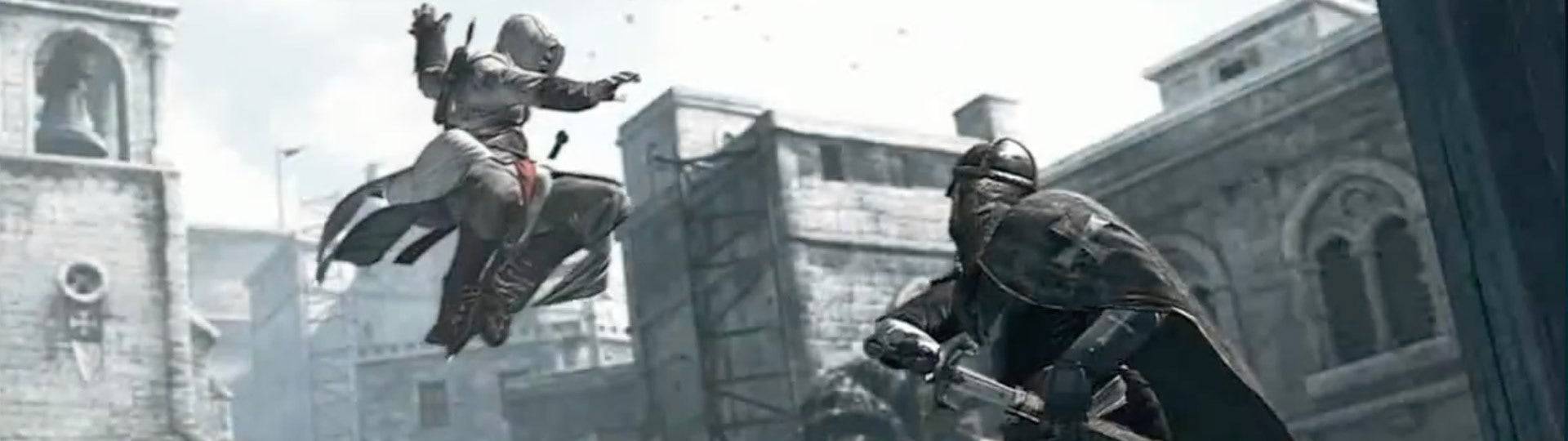
The epic conflict between the Assassins and Templars is a cornerstone of the series, but there's no historical evidence to support this war. The Assassins, founded in 1090 AD, and the Templars, established in 1118, coexisted for about 200 years before disbanding in 1312. The idea of a centuries-long feud is purely fictional, inspired by conspiracy theories surrounding the Knights Templar. While both groups were involved in the Crusades, there's no indication they were ideologically opposed.
The Borgias and their Superpowered Pope
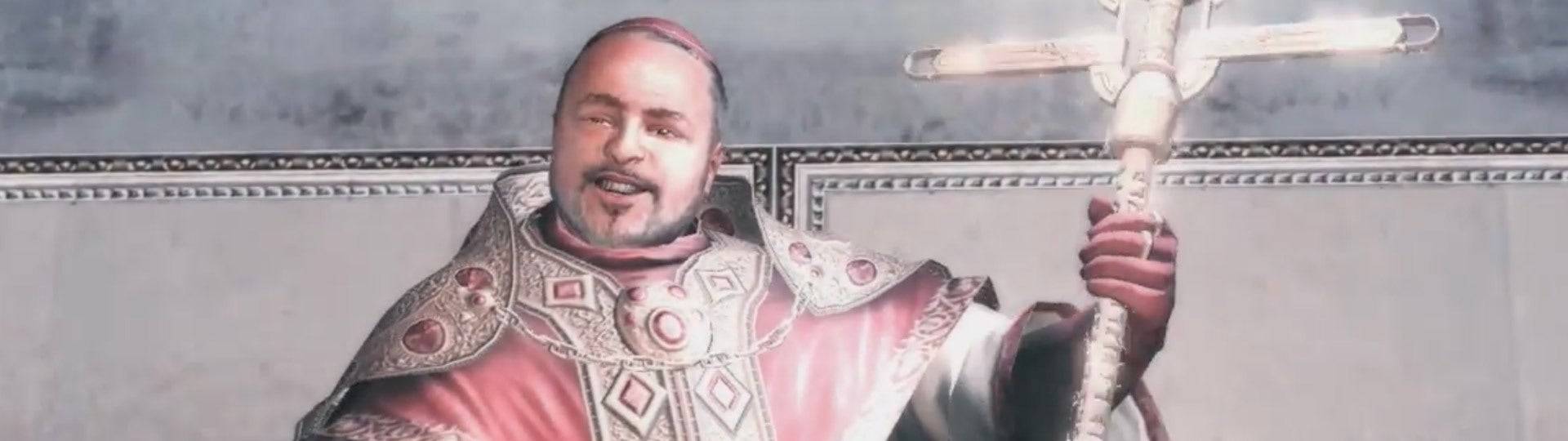
In Assassin’s Creed 2 and Brotherhood, Ezio battles the Borgia family, led by Cardinal Rodrigo Borgia, who becomes Pope Alexander VI. The game suggests Rodrigo was the Grand Master of the Templar Order, plotting to use the magical Apple of Eden to control humanity. In reality, the Templars were not active in the late 1400s, and the Borgias, while controversial, were not the exaggerated villains depicted in the game. Cesare Borgia, portrayed as a psychopathic leader, was viewed differently by contemporaries like Machiavelli, who saw him as a model ruler.
Machiavelli, Enemy of the Borgias
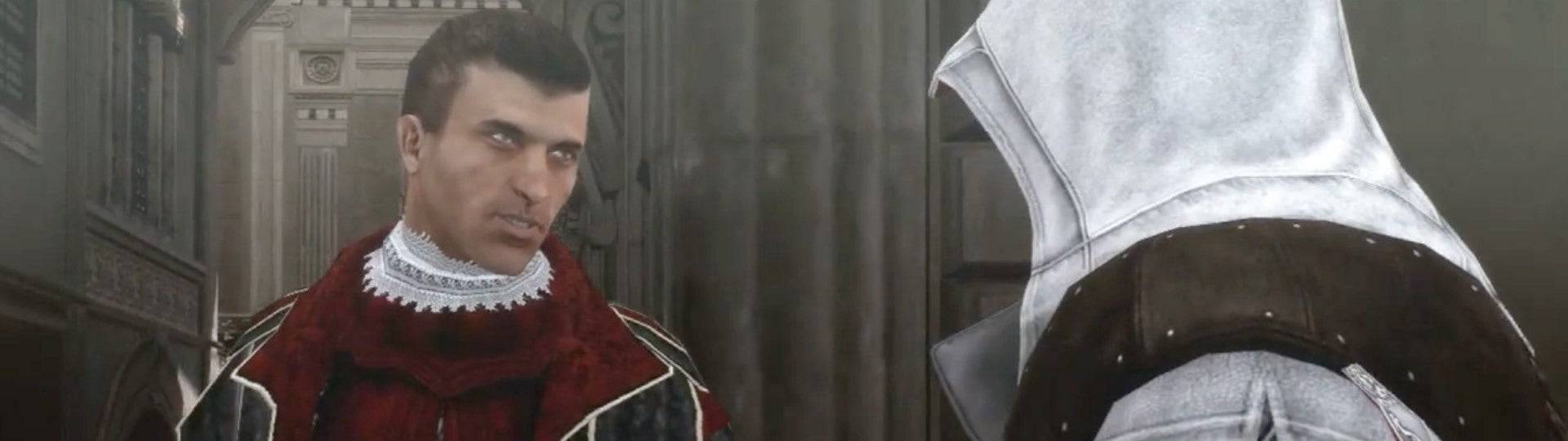
Assassin’s Creed 2 and Brotherhood depict Niccolò Machiavelli as Ezio’s ally and leader of the Italian Assassins. However, Machiavelli's real-life philosophies and actions suggest he would not align with the Assassins' anti-authoritarian stance. He had a more nuanced view of the Borgias, serving as a diplomat in Cesare Borgia's court and admiring his leadership, contrary to the game's portrayal.
The Incredible Leonardo da Vinci and his Flying Machine
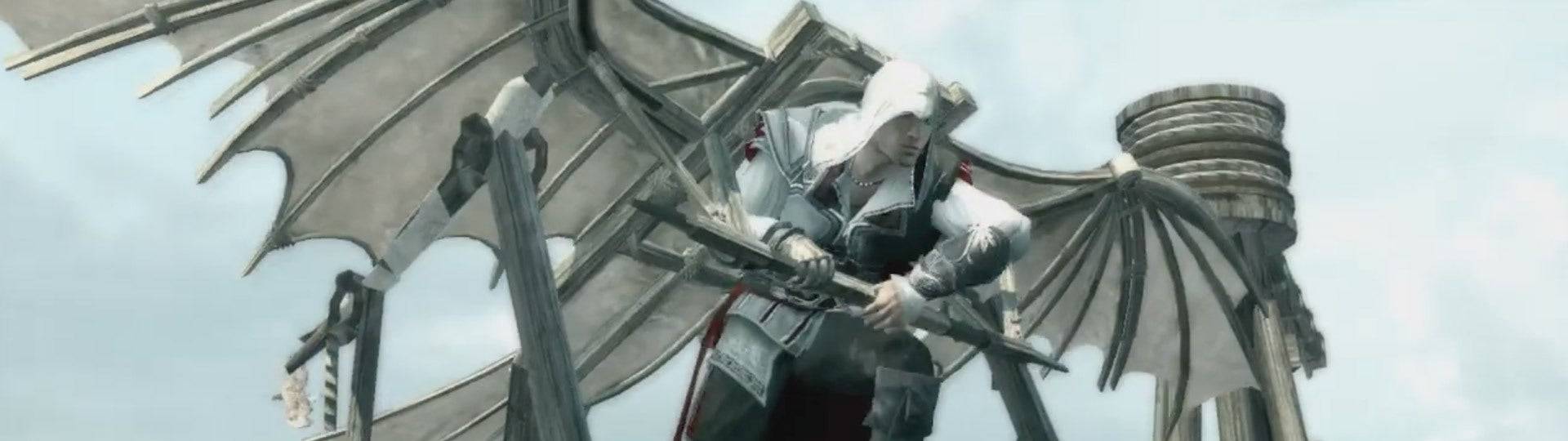
Assassin’s Creed 2 introduces a bromance between Ezio and Leonardo da Vinci, capturing the polymath's charisma and wit accurately. However, the game takes liberties with da Vinci's timeline, moving him from Florence to Venice in 1481 to align with Ezio's story. While da Vinci's designs for machines like tanks and machine guns are brought to life, there's no historical evidence they were built. The flying machine Ezio uses is inspired by da Vinci's sketches, but there's no record of it ever flying.
The Bloody Boston Tea Party
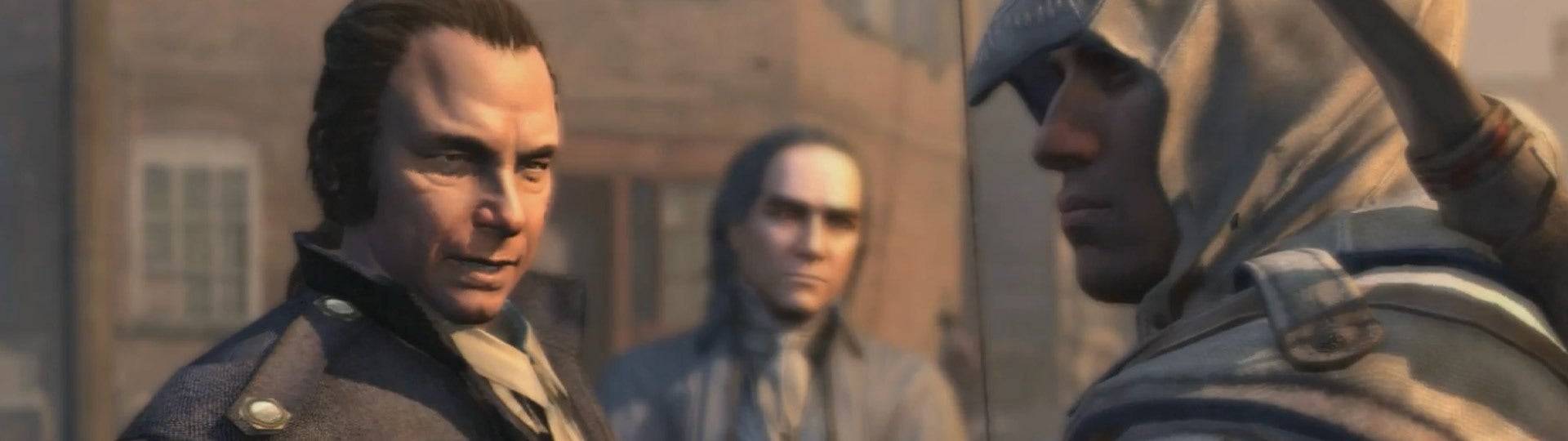
The Boston Tea Party, a pivotal event in the American Revolution, was historically a non-violent protest. In Assassin’s Creed 3, however, protagonist Connor turns it into a violent confrontation, killing numerous British guards. The game also suggests Samuel Adams orchestrated the event, despite historians' uncertainty about his role. This reimagining transforms peaceful protestors into an aggressive mob for dramatic effect.
The Lone Mohawk
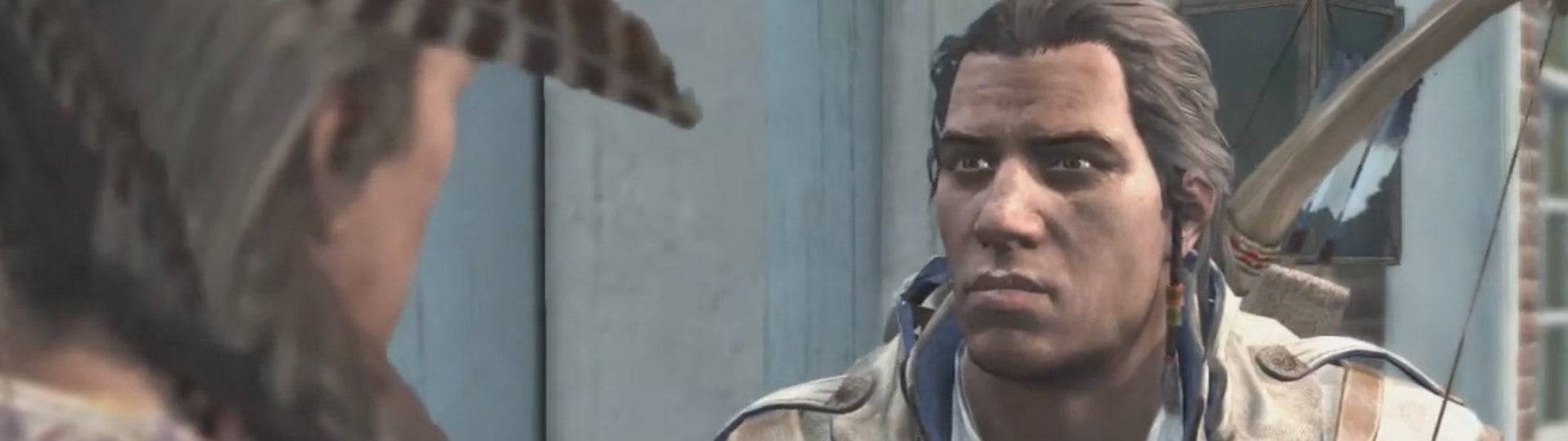
Assassin’s Creed 3 features Connor, a Mohawk who fights alongside the Patriots, despite the Mohawk tribe's historical alliance with the British. While rare instances of Mohawks fighting against the British exist, such as Louis Cook, Connor's scenario is highly unlikely. This narrative choice explores a "what if" scenario, delving into themes of conflict and identity.
The Templar Revolution
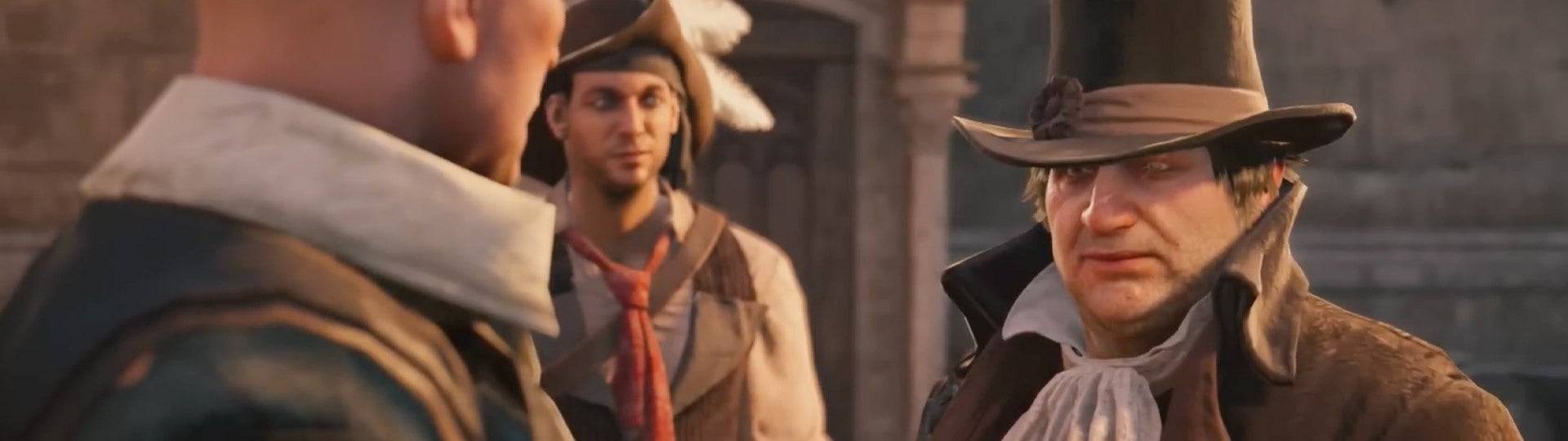
Assassin’s Creed Unity's portrayal of the French Revolution suggests a Templar conspiracy caused the food crisis and Reign of Terror, simplifying the complex historical causes. In reality, the revolution resulted from years of natural disasters and socio-economic issues. The game's narrative implies the monarchy and aristocracy were victims, rather than acknowledging their role in the people's revolt.
The Controversial Killing of King Louis 16

Unity depicts the vote on King Louis 16's execution as a close call influenced by a Templar, whereas historically, it was a clear majority. The game downplays the widespread anger against the French aristocracy and barely addresses the King's attempt to flee France, which worsened his reputation. This portrayal neglects the true causes of the revolution.
Jack the Assassin

Assassin’s Creed Syndicate reimagines Jack the Ripper as a rogue Assassin seeking to control the London Brotherhood. In the game, he trains under Jacob Frye, becomes disillusioned, and turns the organization into a criminal gang. This narrative leverages the uncertainty around Jack the Ripper's identity to craft a compelling story, diverging significantly from historical accounts.
The Assassination of the Tyrant Julius Caesar

Assassin’s Creed Origins reinterprets Julius Caesar's assassination, portraying him as a proto-Templar. The game's depiction diverges from historical accounts, including the Roman Forum's design and the events leading to Caesar's Senate visit. Caesar's real political reforms aimed at helping the poor and soldiers, contrasting with the game's portrayal of his adversaries fighting for the people. Furthermore, Caesar's assassination historically led to the collapse of the Roman Republic and the rise of the Empire, contradicting the game's narrative of a clear victory over tyranny.
The Assassin’s Creed series meticulously crafts immersive historical environments, yet often sacrifices accuracy for storytelling. This approach is fitting for historical fiction, not a historical documentary. It's a video game, after all, designed to entertain and engage. What are your favorite examples of Assassin’s Creed bending the truth? Share your thoughts in the comments.
Latest Articles
Another Eden expands its Chrono Cross collaboration content with Glenn and new story
Another Eden is introducing fresh content to its existing Chrono Cross collaboration materialThe release includes a beloved character named Glenn from The Cursed DragoonA new character and upcoming events are also being added to honor Japan Cat DayAl

The $13 FrSara Portable Neck Fan Is an Inexpensive Solution to Beating the Summer Heat
Summer has arrived, and neck fans are seeing a surge in popularity. These portable fans offer a simple, effective, and affordable way to stay cool and comfortable. Amazon is currently offering 50% off the FrSara Rechargeable Portable Neck Fan with th
Hand-Drawn Photography Adventure Game TOEM Opens Pre-Registration on Mobile
BAFTA-winning title TOEM: A Photo Adventure arrives on mobile devices worldwide.
Developed by Swedish indie studio Something We Made, pre-registration for TOEM is now available on Android. The official release date is set for October 22nd.
Fun fact:
Mutants: Genesis Hits iOS, Android, Steam After Early Access
Clash Royale players finally get to witness the highly anticipated evolution of the Inferno Dragon. After nearly a decade without an upgrade, this fiery Legendary card receives a powerful transformation. The developers at Supercell teamed up with Fin
Pokemon GO Road Trip 2025 Details, Summer Pikachu Available
Experience Pokémon GO Road Trip Truck stops in the gameFind Wooloo, Phanpy, and Alolan Geodude in the wildSummer-style Pikachu makes a special appearanceIf today's new details don't get you excited for the Pokemon GO Road Trip 2025, nothing will. Thi

PlayStation Stars Shuts Down After 3 Years
Sony has announced the discontinuation of its PlayStation Stars loyalty program less than three years after its introduction.The rewards initiative stopped accepting new members today, with exiting participants unable to rejoin. Canceling membership
Latest Games

Sopa De Letras
Word丨24.9 MB

Words of Wonders: Guru
Word丨166.1 MB
Bridge Constructor
Simulation丨151.6 MB
Rescue Robots Sniper Survival
Action丨151.8 MB
Hero Dino Kungfu Fight Ninja
Action丨126.5 MB

Shadowstrike FPS
Action丨739.9 MB
Hero Robot 3D: Robot Transform
Action丨108.1 MB

Ingress Prime
Adventure丨210.8 MB







Top News
MORE +
01
01-06
CDPR acknowledged weak gameplay in The Witcher 3
The Witcher 3, while critically acclaimed, wasn't without its flaws. Many fans felt the combat system fell short.
In a recent interview, Witcher 4's game director, Sebastian Kalemba, acknowledged weaknesses in the previous game's gameplay, specifically highlighting the need for significant improvem
02
01-07
BREAKING: Flight Simulator 2024 Login Woes Ground Players
Flight Simulator 2024 Launch Plagued by Technical Difficulties
The highly anticipated launch of Flight Simulator 2024 has been significantly hampered by widespread technical problems, leaving many players grounded before they could even take to the virtual skies. This article details the reported d
03
11-17
Hogwarts Legacy 2 is "One of the Biggest Priorities" for WB Games
Following the successful launch of Quidditch Champions this week, Warner Bros. Discovery has confirmed its plans for a sequel to last year's Harry Potter-based action RPG hit Hogwarts Legacy—2023's best-selling game.Hogwarts Legacy Sequel Plans Confirmed by Warner Bros. DiscoveryExpected in
04
11-16
Airplane Chefs Brings The Ultimate Snack, Pringles, On Board!
Buckle up for some snacks as Nordcurrent has just dropped an exciting event for their cooking game. It’s the most unexpected collab of Airplane Chefs and Pringles. If you’ve been enjoying your virtual life as a flight attendant, things are about to get a lot tastier.The game developer behind p
05
11-16
Play Together to collaborate with Sanrio and introduce new My Melody and Kuromi content
Play Together is bringing back its Sanrio collab with the appearance of My Melody and KuromiYou can collect coins by completing their themed missions that can then be used to draw exclusive itemsAs a bonus there's also new summer-themed content and events, including a major bug huntPlay Together, th
Topics
More +