
The Biggest Gaming Monitor Trends of CES 2025
Author : Jack
Mar 18,2025
CES 2025 showcased a plethora of new gaming monitors, highlighting significant advancements in display and graphics technology. The show revealed some exciting surprises and impressive feature upgrades, making 2025 a landmark year for gaming monitor enthusiasts.
QD-OLED's Continued Dominance and Increased Accessibility
QD-OLED technology solidified its position as a leading force in gaming monitors. Major brands like MSI, Gigabyte, and LG all unveiled QD-OLED offerings, emphasizing improved burn-in warranties and protective features. The trend toward this display technology, already strong in 2024, is set to accelerate. Several companies introduced 4K 240Hz QD-OLED monitors with high-bandwidth DisplayPort 2.1 connections. MSI even unveiled a groundbreaking 1440p QD-OLED, the MPG 272QR QD-OLED X50, boasting a 500Hz refresh rate. The advancements in protective features are also noteworthy, with Asus's Neo Proximity Sensor in the ROG Swift OLED PG27UCDM and ROG Strix OLED XG27AQDPG automatically displaying a black screen when the user is away, mitigating burn-in. As the technology matures, price reductions are anticipated, making these high-performance monitors more accessible.
Mini-LED: A Viable Contender
While not as prominent as QD-OLED, Mini-LED technology remained a significant presence. MSI positioned its MPG 274URDFW E16M, featuring dual-mode AI mini-LED, as a more affordable QD-OLED alternative. This 4K, 160Hz monitor (with 320Hz at 1080p) boasts 1,152 local dimming zones and a peak brightness of 1,000 nits, offering impressive contrast. Although the AI-driven dual-mode functionality is questionable, Mini-LED's advantages—high brightness, excellent contrast, and the absence of burn-in risk—make it a compelling option, especially if pricing remains competitive.
Higher Refresh Rates and Resolutions
The convergence of refined QD-OLED technology and more powerful graphics cards continues to drive higher refresh rates. 4K 240Hz monitors are now a reality, with 1440p 500Hz monitors also emerging. Gigabyte's Aorus FO27Q5P, targeting VESA TrueBlack 500 certification, stands out for its vibrant display and high brightness. MSI resurrected TN panels with the MPG 242R X60N, achieving a remarkable 600Hz refresh rate, although this comes with trade-offs in color accuracy and viewing angles. The year also saw the emergence of 5K monitors, with Acer's Predator XB323QX (5K, 144Hz) and LG's pair of "5K2K" ultrawide monitors (5120 x 2160) leading the charge. Asus even showcased a 6K (6016 x 3384) monitor, the ProArt Display 6K PA32QCV, aimed at creators.
Smart Monitors Blur the Lines Between TVs and Gaming Monitors
Smart monitors, offering built-in streaming services, are gaining traction. While not all showcased models were explicitly gaming-focused, the trend is clearly growing. HP's OMEN 32x Smart Gaming Monitor (32-inch 4K) and LG's UltraGear 39GX90SA (ultrawide) provide streaming capabilities. Samsung's M9 Smart Monitor, featuring a 4K OLED panel and neural processing for enhanced picture quality and upscaling, also offers a compelling option for gamers with its 165Hz refresh rate.
Conclusion
CES 2025 demonstrated the continued evolution of gaming monitors, pushing boundaries and hinting at future innovations. Following a strong 2024, 2025 promises to be even better, offering a diverse range of options for gamers at various price points and with diverse needs.
Latest Articles

Goblin Valley: Cozy Home Game Opens Pre-Registration
Build and expand your thriving goblin farm villageInteract with quirky goblins, each with unique personalitiesMonitor and fulfill your goblin residents' needsUnimob Global has recently launched pre-registrations for Idle Goblin Valley: Chill Farm, of

Heartopia is kicking off its first closed beta test next month
The initial CBT runs from November 4th through the 18thEngage in hobbies such as fishing, birdwatching, and cookingAdopt pets, customize your home interior, and design unique outfitsHeartopia, XD Games’ highly anticipated life simulation title announ

Summoners War set to host collaboration with the iconic fantasy book series The Lord of the Rings
Summoners War: Sky Arena has teamed up with none other than The Lord of the Rings.
Set to launch later this month, the collaboration brings iconic characters from the Fellowship and beyond into the game.
The Lord of the Rings needs no introduction—it

Another Eden expands its Chrono Cross collaboration content with Glenn and new story
Another Eden is introducing fresh content to its existing Chrono Cross collaboration materialThe release includes a beloved character named Glenn from The Cursed DragoonA new character and upcoming events are also being added to honor Japan Cat DayAl

The $13 FrSara Portable Neck Fan Is an Inexpensive Solution to Beating the Summer Heat
Summer has arrived, and neck fans are seeing a surge in popularity. These portable fans offer a simple, effective, and affordable way to stay cool and comfortable. Amazon is currently offering 50% off the FrSara Rechargeable Portable Neck Fan with th
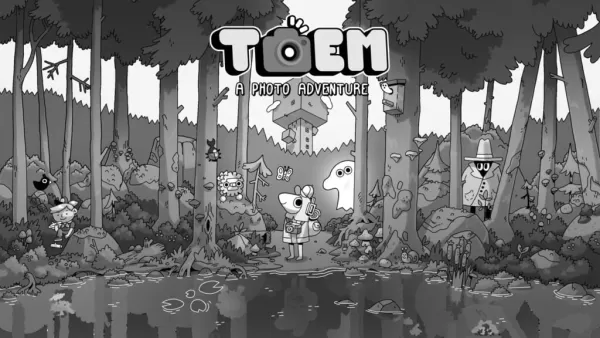
Hand-Drawn Photography Adventure Game TOEM Opens Pre-Registration on Mobile
BAFTA-winning title TOEM: A Photo Adventure arrives on mobile devices worldwide.
Developed by Swedish indie studio Something We Made, pre-registration for TOEM is now available on Android. The official release date is set for October 22nd.
Fun fact:
Latest Games

المهجول: هجولة ودرفت
Racing丨468.3 MB

Arclight City
Role Playing丨8.2 MB

Temple of Endless Night
Role Playing丨10.8 MB

BattleMass
Role Playing丨113.2 MB



Pixel Odyssey
Role Playing丨47.2 MB
Blade of Chaos
Role Playing丨27.2 MB









Top News
MORE +

01
01-06
CDPR acknowledged weak gameplay in The Witcher 3
The Witcher 3, while critically acclaimed, wasn't without its flaws. Many fans felt the combat system fell short.
In a recent interview, Witcher 4's game director, Sebastian Kalemba, acknowledged weaknesses in the previous game's gameplay, specifically highlighting the need for significant improvem
02
01-07
BREAKING: Flight Simulator 2024 Login Woes Ground Players
Flight Simulator 2024 Launch Plagued by Technical Difficulties
The highly anticipated launch of Flight Simulator 2024 has been significantly hampered by widespread technical problems, leaving many players grounded before they could even take to the virtual skies. This article details the reported d
03
11-17
Hogwarts Legacy 2 is "One of the Biggest Priorities" for WB Games
Following the successful launch of Quidditch Champions this week, Warner Bros. Discovery has confirmed its plans for a sequel to last year's Harry Potter-based action RPG hit Hogwarts Legacy—2023's best-selling game.Hogwarts Legacy Sequel Plans Confirmed by Warner Bros. DiscoveryExpected in
04
11-16
Airplane Chefs Brings The Ultimate Snack, Pringles, On Board!
Buckle up for some snacks as Nordcurrent has just dropped an exciting event for their cooking game. It’s the most unexpected collab of Airplane Chefs and Pringles. If you’ve been enjoying your virtual life as a flight attendant, things are about to get a lot tastier.The game developer behind p
05
11-16
Play Together to collaborate with Sanrio and introduce new My Melody and Kuromi content
Play Together is bringing back its Sanrio collab with the appearance of My Melody and KuromiYou can collect coins by completing their themed missions that can then be used to draw exclusive itemsAs a bonus there's also new summer-themed content and events, including a major bug huntPlay Together, th
Topics
More +